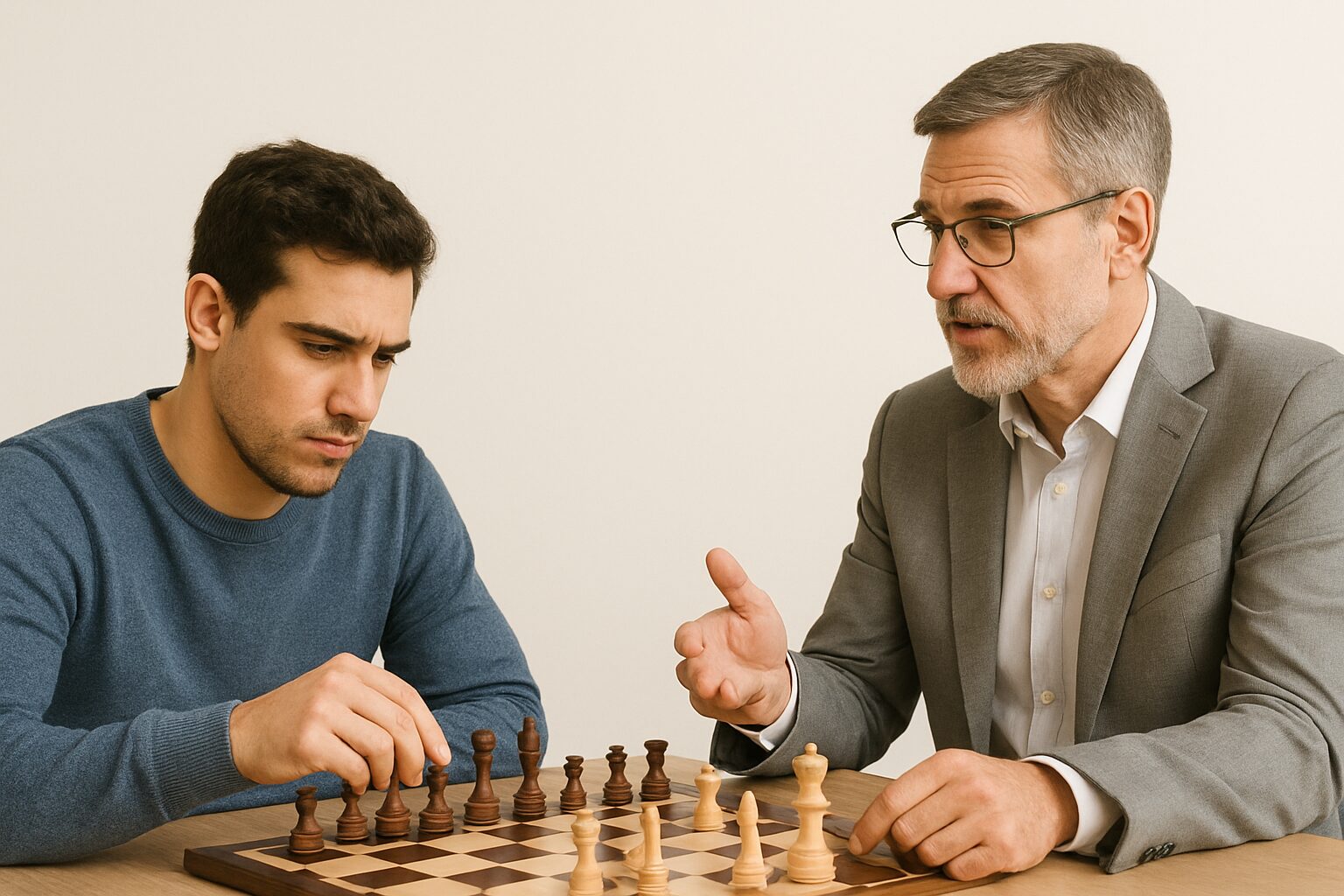

Chess is among the world’s ancient games of strategy, but mastering it in the current world has become more difficult than ever, which is why chess coaches are important now. There are millions of players all over the internet, an infinite number of vacancies, engines as mighty as they can be, and limitless resources, so it is easy to lose track.
This is the reason why chess coaches are essential. They offer tutoring, organization, and customized education that cannot be replaced by any engine or YouTube video. A chess coach will make you improve faster, whether you are a novice who only wants to know how the pieces move or a professional player who wants to win competitions; he or she will assist you in achieving your potential.
The Core Role of a Chess Coach
A chess coach does much more than teach moves. They shape how you think about the game.
Giving You the Right Foundation
Most players start by copying moves from videos or following random opening lines online. This leads to shallow understanding and bad habits. A coach ensures you learn:
- proper development
- center control
- basic tactics
- opening ideas instead of memorizing lines
- safe king positioning
- How to avoid common traps
This foundation is essential, and without it, you will hit a rating plateau very quickly.
Creating a Personalized Study Plan
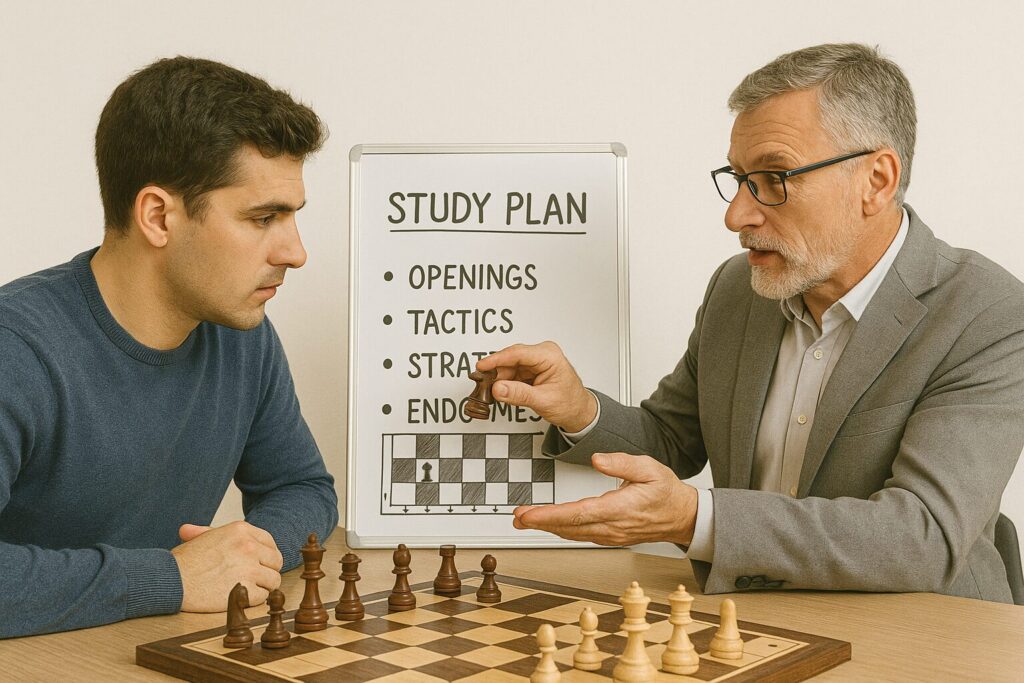
One of the biggest reasons chess coaches are essential is their ability to personalize instruction and make chess study plans.
Engines cannot tell you:
-
Why do you always miscalculate under time pressure
-
Why do you miss simple tactics?
-
Why do you struggle in endgames?
-
Why do you keep pushing pawns unnecessarily?
A coach studies your games, identifies weaknesses, and builds a custom plan for your improvement. This saves months, even years, of wandering without direction.
Benefits of Chess Coaching for Different Skill Levels
How Coaches Help Beginners
For beginners, a coach is the difference between confusion and clarity. They explain:
- basic rules
- chess openings
- How pieces coordinate
- What to look for during a game
- How to avoid losing pieces
Most importantly, they prevent bad habits like moving the same piece repeatedly or ignoring the center.
How Coaches Help Intermediate Players
Intermediate players (800–1600 rating) face new challenges:
-
irregular blunders
-
inconsistent opening choices
-
lack of middlegame understanding
-
poor planning skills
A coach teaches pattern recognition, strategy, and long-term planning. You are taught how to position, improve pieces, and create winning plans.
How Coaches Help Advanced Players
Advanced players want to break rating barriers or prepare for tournaments. Coaches help them with:
-
-
opening preparation
-
opponent analysis
-
-
psychological readiness
-
deep strategy
-
advanced calculation methods
This is where the coach becomes a mentor, helping shape competitive strength.
Why Chess Coaches Are Better Than Self-Learning
Many players believe they can improve alone using videos or engines. While these tools are useful, they cannot replace human guidance.
Faster Progress Through Structure
A coach gives direction. Instead of jumping from one opening to another or watching random videos, you follow a structured plan:
-
Study openings suitable for your style.
-
Learn thematic middlegames.
-
Practice-specific endgames.
-
Correct recurring mistakes.
Progress becomes consistent and measurable.
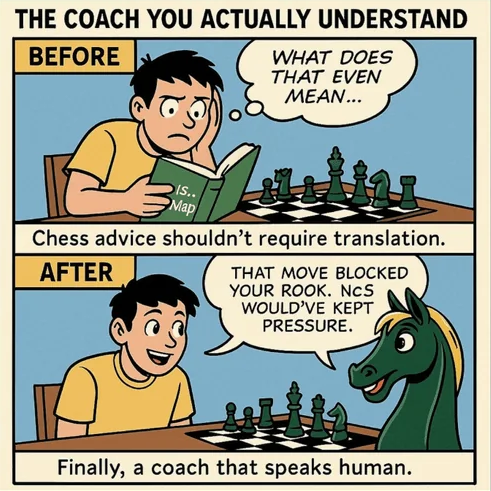
Human Explanation Beats Engine Moves
Engines show the best move, but they don’t tell you why it’s the best.
A coach explains:
-
The logic behind moves
-
the plan behind the position
-
What you should be thinking
-
What patterns did you miss?
This human perspective accelerates understanding.
Emotional and Psychological Benefits of Having a Coach
Chess is also a mental battle. Players often struggle with emotions, pressure, and confidence.
A coach teaches you how to:
-
Recover after losses.
-
Avoid tilt.
-
Make decisions calmly.
-
Focus during long games.
-
Manage your mindset in tournaments.
This emotional stability is something engines cannot teach.
Motivation, Discipline, and Accountability
The presence of a coach holds you responsible. You attend classes, do homework, and keep yourself inspired. Such a disciplined regularity normally results in breakthrough improvement.
How Chess Coaches Build Complete Players
Chess is not just about tactics or openings. It is a complete skill set.
Balanced Training: Openings, Middlegames, Endgames
Most self-learners over-focus on tactics or openings. Coaches help you balance:
-
Calculation.
-
Strategy.
-
Piece coordination.
-
Endgame technique.
-
Positional understanding.
-
They even help you become a chess grandmaster.
This balance creates long-term strength.
Real Tournament Preparation
For tournament players, a coach is essential. They help with:
-
Opening preparation based on opponents.
-
Analyzing previous games.
-
Building mental endurance.
-
Choosing practical lines.
-
Handling time trouble.
This is how champions are made.
Signs You Need a Chess Coach
You may need a coach if:
-
You feel stuck at the same rating.
-
You keep making the same mistakes.
-
You feel lost on what to study.
-
You improve in tactics but not in real games.
-
You panic in complicated positions.
-
You start games without a plan.
A coach helps you break through these barriers.
Choosing the Right Chess Coach
Not all coaches are the same. You should look for:
-
Clear teaching ability
-
strong communication
-
experience with your level
-
a structured approach
-
Understanding of modern chess
Above all, you are expected to be at ease asking questions and sharing ideas.
Online vs In-Person Coaching
-
Online coaching is adaptable, cost-effective, and trendy.
-
Choose chess platforms to play online while your coach sees the game.
-
Face-to-face coaching is more interactive.
-
Both are good, and you can use either one that is more comfortable and accessible to you.
What Modern Players Can Still Learn From Coaches
Even with engines, databases, and online tools, coaches remain vital because they teach:
-
How to think
-
How to plan
-
How to stay calm
-
How to apply ideas in practical situations
Engines are strong, but they cannot replace strategic explanation and human insight.
Final Thoughts – Why Every Player Benefits From a Coach
A chess coach is not merely a teacher; he/she is a mentor/ guide and motivator. They assist you in not making errors, becoming a better player and disciplined, and they also help you know the game better.
No matter your ambition to be a good casual player or appear in competitions, a coach will provide you with the instruments to develop and feel confident. Play a chess game online for free, which will improve your skills without any cost.
That is why chess coaches have been significant at any time in the history of the game. They aid in changing interest to skill, and skill to mastery.
FAQs
Is it necessary to get a chess coach?
A coach does not always improve, but improves much faster. They mentor you, correct you, and help you avoid developing bad habits. Self-learning is a lot more time-consuming.
Is a chess coach helpful to novices?
Yes, a coach can guide novices to the right way, recognize easy tricks, and develop good habits immediately. This simplifies the process of learning and makes it enjoyable.
Do we have effective online chess teachers?
Yes, Online coaching is flexible, cheap, and as useful as face-to-face classes. At any location, you receive individual training, game study, and individual counseling.